
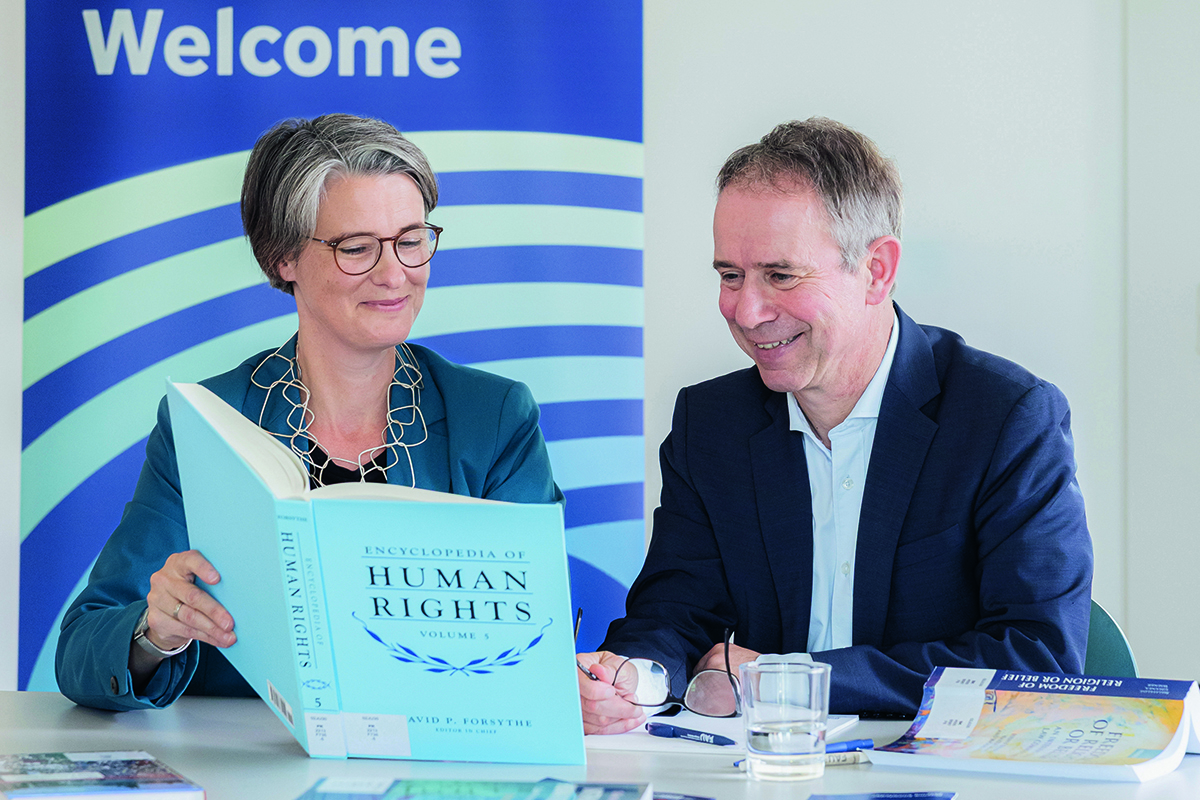
Strengthening human rights in a critical time and breaking new ground in research: The new Cluster of Excellence at FAU shows that human rights and inter- and transdisciplinary human rights research are not obsolete.
“Our goal is to shed new light on the potential and the limits of human rights,” emphasizes Katrin Kinzelbach, Chair of Human Rights Politics. Together with Prof. Dr. Markus Krajewski, Chair of Public Law and International Law, she forms the spokesperson team of the new FAU Cluster of Excellence “Transforming Human Rights,” based at the interdisciplinary FAU Center for Human Rights Erlangen–Nuremberg (FAU CHREN). “Around 30 million euros in funding for the Cluster of Excellence over the next seven years, plus seven million euros for strategic investments to be used across disciplines to support early-career researchers and promote internationalization: That is a great success for human rights research at FAU,” says Markus Krajewski. But above all, it is a team success. This is because the researchers who submitted the application were actively supported by the university administration and leadership throughout the lengthy and demanding process. And even so, success was not guaranteed.
Water under the bridge?
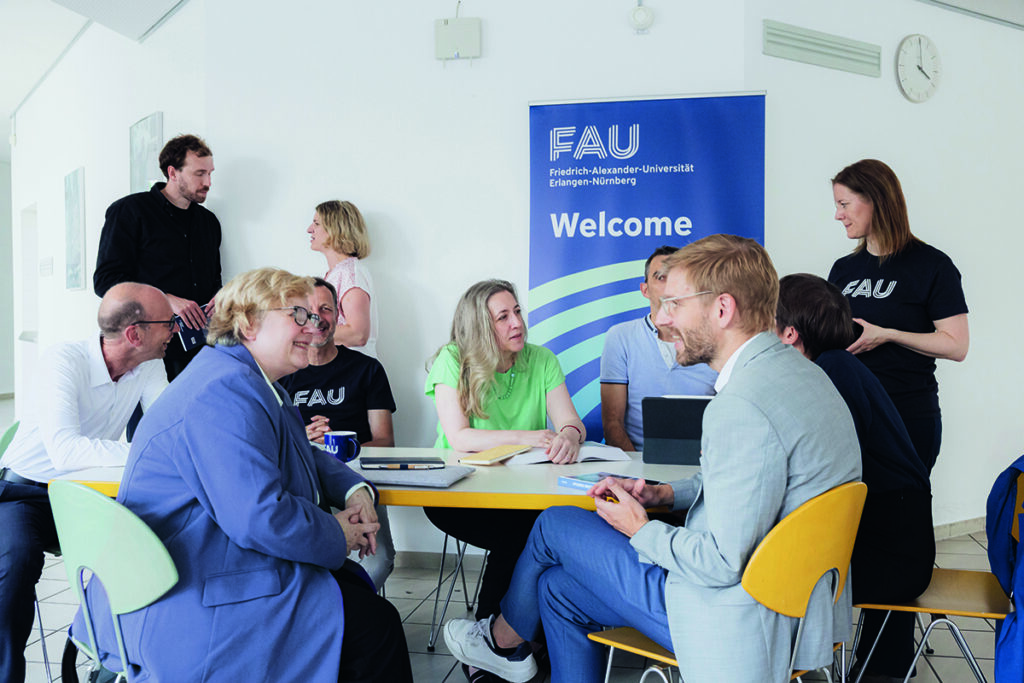
One question from the review panel, which Krajewski and his FAU colleagues had to address at the end of last year, particularly stuck with the legal scholar: Isn’t it a bit late to want to research and work so intensively on the topic of human rights? At a time when they are not only violated every day, but are also being fundamentally questioned more and more openly? His answer: The human rights crisis is serious. Nevertheless, there are still good reasons for confidence in human rights, and engaging with them is anything but water under the bridge. Not least because there are still plenty of stakeholders around the world who continue to uphold, demand, defend, and further develop human rights today – despite all the predictions of their demise. There is still much to understand and to question in human rights research, especially now. “In the end, it was the internationally oriented ambitions of our cluster project that convinced them,” emphasizes Krajewski.
Megatrends and interdisciplinarity
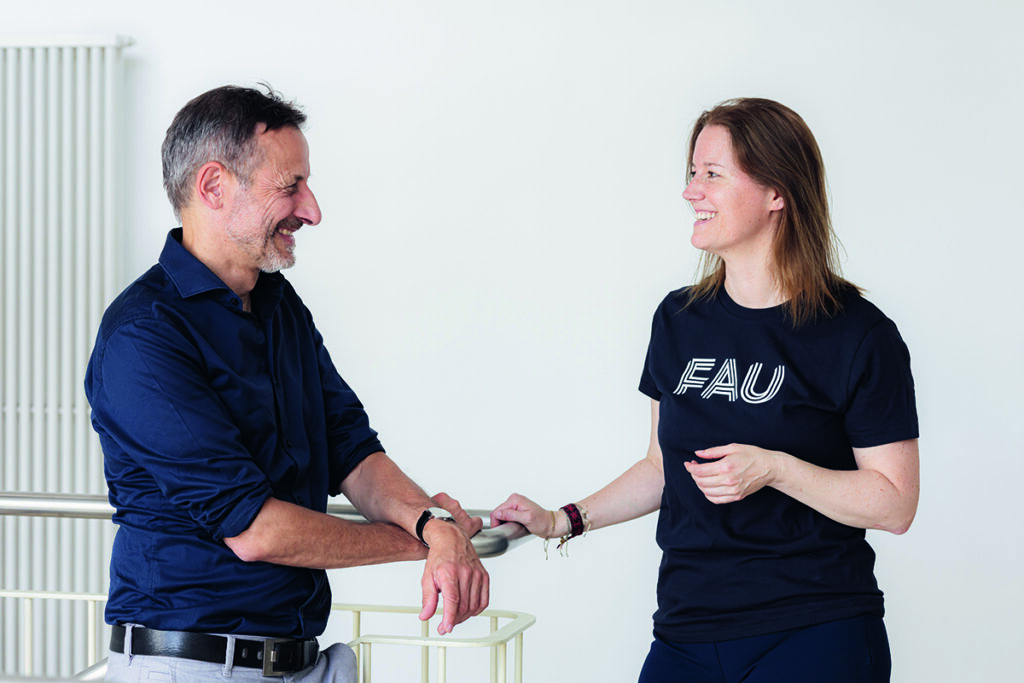
It focuses on five megatrends: autocratization, the fragmentation of economic globalization, international migration, environmental crises across the planet and digitalization. “We want to explore how these megatrends are changing human rights norms, institutions, and practices, and how human rights, in turn, can and should change the megatrends,” explains Kinzelbach. The focus here is on interdisciplinary collaboration in terms of methodology. For example, Georg Glasze did not become a geographer because he wanted to research human rights topics. And yet, as part of the cluster, that is exactly what he is doing. Together with anthropology, computer science, law, and political science, he contributes his perspective on how human rights thinking can be translated into the digital age and, in doing so, provides guidelines for shaping an increasingly technologized world. But it is not only technological advances that are raising new questions for human rights. Climate change, species extinction, and environmental pollution are also bringing the rights of future generations into focus. At the same time, it is becoming clear how closely humans and nature are interconnected. “Geography makes these connections visible and asks which aspects of nature we want to protect in the future and how human rights can help address these challenges,” says the professor of cultural geography. His thoughts: “Human rights are one of the few normative anchors we have. That is why we need to think together about how they can be further developed so that they can continue to provide guidance in the future.”
Applying insights from practice
Almut Schilling-Vacaflor is also part of the cluster. One of her main tasks is to promote and strengthen methodological diversity. Transdisciplinarity is a particular concern for the Professor of International Business, Society and Sustainability – that is, the joint production of knowledge not only across various academic disciplines, but also in close exchange and dialog with practitioners. Because that is also what the Excellence Cluster “Transforming Human Rights” stands for. To be able to draw on knowledge from practice, human rights activists as well as organizations and companies are also involved in the research work. “We are also interested in their perspectives and solutions when it comes to strengthening human rights,” emphasizes Almut Schilling-Vacaflor. For Katrin Kinzelbach, Almut Schilling-Vacaflor, Markus Krajewski, Georg Glasze, and the other 23 professors from a wide range of academic disciplines, working in the cluster is a project close to their hearts. They are all united by the ambition to make a difference across departmental boundaries and through international collaboration – in a field of research that is far from obsolete.
An obituary: Michael Krennerich, pioneer of human rights research at FAU
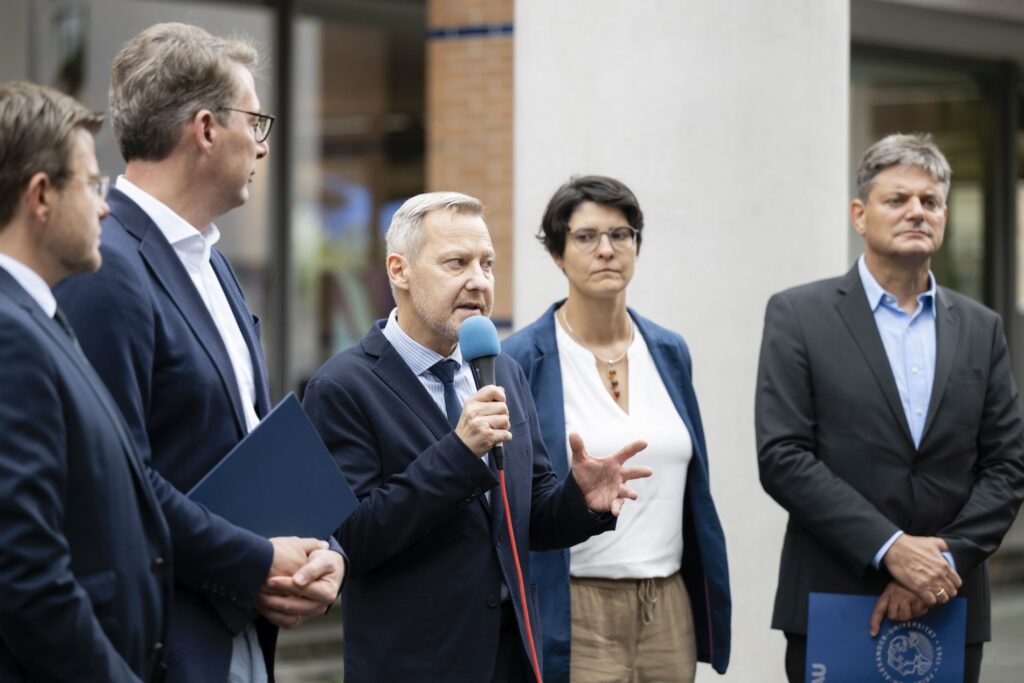
Michael Krennerich dedicated his life’s research to human rights. The university lecturer and scholar, who passed away on December 28, 2024 after a long and serious illness, played a decisive role in shaping the development of the Chair of Human Rights and Human Rights Policy at FAU from the very beginning. This applies both to the role of the Chair within the institute and to the extensive cooperation structures that extend beyond faculty boundaries. Krennerich was a driving force behind the establishment of the Center for Human Rights Erlangen–Nuremberg (FAUCHREN). He also played a key role in advancing the FAU project “Transforming Human Rights” on its path to becoming a Cluster of Excellence.
Michael Kniess
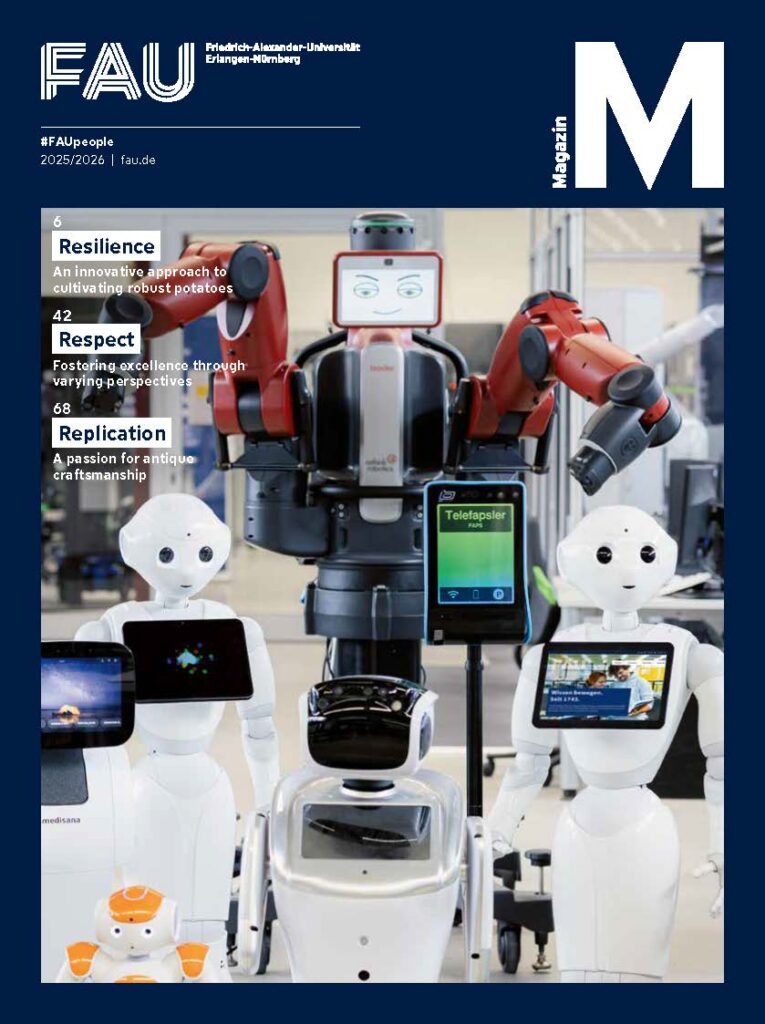
This article is part of the FAU Magazine
The third issue of the FAU Magazine #People is once again all about the people who make our FAU one of the best universities in the world. The examples in this issue show how lively and diverse our research is, the commitment of our students, and the work in the scientific support areas.
Highlight is certainly the new research cluster “Transforming Human Rights.” Or you can follow our scientists into laboratories and workshops, where they make potatoes climate-resistant, teach robots social behavior, or reconstruct ancient ships and cannons. At FAU, students are developing vertical take-off aircraft or impressing with outstanding performances at the Paralympics. And let’s not forget the people who work at our university or remain closely connected as FAU alumni. Visit the Children’s University with them or watch a TV series with an FAU alumna and Grimme Award winner.
- File Name
- FAU_Magazine_2025_2026
- File Size
- 3 MB
- File Type